
The short answer
I audited the website of a two-cabin rental near Jasper, Arkansas, the same way I would for a client. Most of its Book Now buttons led to a page that no longer exists, there was no working phone or email link, and the homepage weighed 6.5 MB. The bones were good: real photos, a great story and about 15 local guide pages. And the hardest part was already done. Both cabins are rated above 4.8 on Airbnb, with more than 250 reviews between them. Here’s what I found, the order I’d fix it in and how I’d turn those happy guests into direct bookings.
The report card
Every audit covers the same areas, starting with what’s already working. The grades are my judgment from the checks below, not a score from a tool.
| Area | Grade | Biggest issue |
|---|---|---|
| Guest reviews | A | Both cabins rated above 4.8 on Airbnb, with more than 250 reviews between them |
| Booking direct | F | Most Book Now buttons led to a page that no longer exists |
| Google search | C | Dated keyword stuffing and mixed signals about the site address |
| AI visibility | D | The basic facts guests ask about weren’t written anywhere |
| Speed and phones | D | Mobile PageSpeed 37, a 6.5 MB homepage and pinch-to-zoom turned off |
| Content and trust | C+ | Great local guides, but no rates, amenities or reviews on the site |
The hard part is already done
Before any of the problems, here's what this owner got right. Both cabins are rated above 4.8 stars on Airbnb, with more than 250 reviews between them. Guests like what was built here, and they keep saying so.
That's the part no website can fake. A new rental starts with zero reviews and no one who has stayed. This one has years of happy guests, a reputation and people who already know the place. A better website doesn't have to create demand. It just has to stop losing the demand that's already there.
Those reviews can do three jobs off Airbnb:
- Proof on the website. A real star rating and review count builds more trust than “best” or “highest rated.”
- Facts for Google and AI tools. A clear rating on the site gives them something specific to repeat when a guest asks for a well-reviewed cabin near the Buffalo River.
- Guests who come back. People who loved a place often want to return. The next section covers how to bring them back direct.
Booking: every path was broken
This is the one that costs money every day. A guest who has already decided to book either hit an error page or got sent to Airbnb, where the owner pays fees on a guest who came looking for them.
- Button 1 Old booking engine, no longer works
- Button 2 Old booking engine, no longer works
- Button 3 Old booking engine, no longer works
- Button 4 Old booking engine, no longer works
- Button 5 Old booking engine, no longer works
- Button 6 Sent to Airbnb
- Button 7 Sent to Airbnb
- 0 of 7let a guest book on the cabin's own site
| 5 of 7 Book Now buttons | Linked to the host’s old booking engine, which no longer works |
|---|---|
| The other 2 Book Now buttons | Sent guests to Airbnb, where the owner pays a fee on every booking |
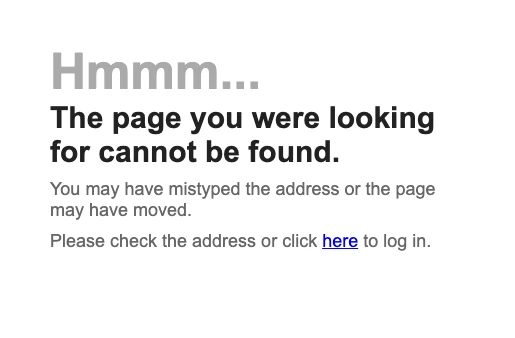
| Book Now on one cabin | The link was typed wrong, so it doesn’t open any page |
| The phone icon | Tapping it does nothing. The number wasn’t on any page |
| Not listed anywhere on the site | |
| Contact form | Name and phone only. No email, dates or number of guests |
| Facebook link | Goes nowhere |
The Book Now buttons pointed to the property's old Little Hotelier booking page. That account is no longer active, which is fine. Owners change software all the time. The problem is that nobody updated the buttons afterward, and nothing on the site warns anyone. A link that worked when the site launched can quietly break years later.
No page showed nightly rates, minimum stays, check-in times or a calendar. To learn anything they needed to decide, a guest had to leave the site.
Google and AI: plenty of words, few facts
The site was clearly built with search in mind, a few years ago. Some of that still works. Some of it works against it now.
What was working
- About 15 local guide pages on the river, hiking, waterfalls, swimming holes, caves and restaurants, each 1,100 to 1,500 words.
- Every main page had its own title, one main heading and a description.
- Every cabin and gallery photo had a written description (alt text).
What needed fixing
- Keyword stuffing. The same phrase, the town name plus “cabin rentals,” was the main heading and showed up in nearly every title, description and photo name. Google's spam guidelines warn against it, and it reads oddly to guests.
- Mixed signals about the address. The site loads securely (https), but the behind-the-scenes tags and sitemap all pointed to the old http version.
- No lodging details for search engines. Nothing in the page code told Google this is a lodging business with an address, cabins, amenities and a rating.
- Old content. The homepage hadn't changed since 2023, and the newest guide was from 2021.
For AI tools like ChatGPT, the gap was bigger. They answer from clear, plain facts. Bedrooms, beds, baths, pets, Wi-Fi, a hot tub, check-in time, minimum stay and a price range weren't written anywhere. The address was a rural box number with no map. There was no FAQ answering what guests really ask: Is there cell service? Is the road OK for a regular car? How far is the river?
That's the difference between having a lot of content and having the right content. This site had plenty of local writing. What it didn't have was the practical detail a guest, or an AI tool, needs to say “this one.”
Speed on phones
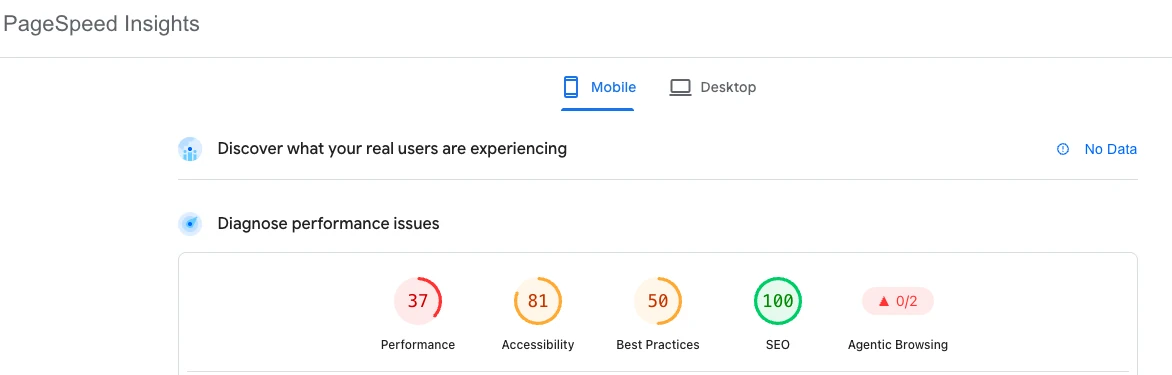
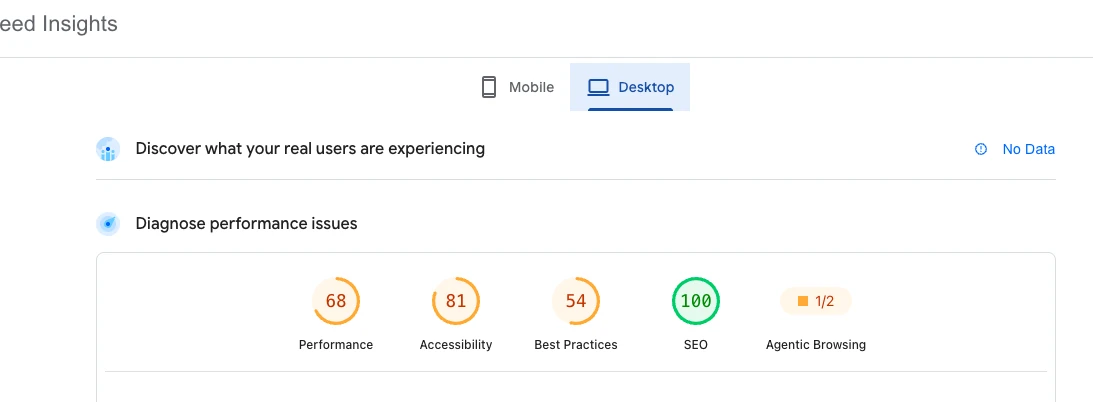
Google's PageSpeed test scored the homepage 37 for performance on a phone and 68 on a computer. Phones are where most guests look, so the 37 is the number that matters.
Notice the SEO score of 100. That sounds great, but PageSpeed only checks the basics, like whether each page has a title and a description. It doesn't catch keyword stuffing, mixed address signals or missing lodging details. A perfect score there is a starting point, not a clean bill of health.
One homepage load moved 6.5 MB across 91 requests and took about 14 seconds to finish. That's a long wait for a guest checking the site on their phone.
- Large photos. The six biggest were 480 KB to 965 KB each, in older formats. Resized and saved in a modern format, each would likely be 80 to 150 KB with no visible difference.
- A background video in the header, plus two video players loading even when nobody pressed play.
- Four tracking tools and another third-party script, one of them firing about a dozen tracking pixels on every visit.
- A heavy page builder with 28 script files and 12 stylesheets.
Two phone problems stood out. The page builder's default logo showed in the mobile header instead of the property's own logo, so it was the first thing a phone visitor saw. And pinch-to-zoom was turned off, which makes the site harder to use for anyone who needs to enlarge text.
Strong story, missing facts
The raw material was better than most sites I see:
- A real story. One cabin started as a hunting cabin on a bluff, with a big iron deck high above a creek valley and fog rolling through in the fall. That's the reason to book, and it was buried halfway down the page.
- Two clear choices: a larger cabin for families and friends, and a smaller one for couples.
- Real photos instead of stock.
What was missing was everything a guest checks before they commit:
- No amenities list: Wi-Fi, cell service, heat and air, pets, the road in, the kitchen
- No rates, minimum stay, check-in time or cancellation policy
- No reviews on the page. The testimonials page was empty to search engines, and “Read Reviews” sent people to Google
- Claims like “highest rated” and “best” with nothing to back them up. More than 250 reviews at 4.8 stars and up says it better
A place to stay and things to do
Guests aren't just booking a bed. They're planning a trip. Before they pick a cabin, they want to know what they'll do once they get there: the hikes, the waterfalls, the river, where to eat and how far each one is. A site that answers both questions, where to stay and what to do, gives a guest every reason to book and no reason to leave.
This site already had the hard part. About 15 local guides covered the river, hiking, waterfalls, swimming holes, caves and restaurants, and they were well written. Most owners never write one. These just needed to be updated and tied back to the cabins, so every guide answers “how close is it to where I'm staying?”
Every guide should cover:
- Walking or driving time from the cabin. “20 minutes to the trailhead” is what a guest is trying to figure out.
- What it's like and who it's for. How long the hike is, how hard, whether kids or dogs can go.
- When to go. The best season and time of day, like waterfalls after spring rain or fall color in late October.
- Practical tips. Parking, crowds, cell service and whether the road is OK for a regular car.
- The closest cabin, with a link to book it.
Near the cabin
- The bluff trail Hike 5 min walkStarts at the cabin. Best at sunrise, when the fog sits in the valley.
- Waterfall hike Hike 20 min driveEasy 2-mile round trip. Runs best after spring rain.
- Swimming hole on the river River 15 min driveGravel bar parking. Go early on summer weekends.
- Elk viewing Wildlife 25 min driveEarly morning or near dusk, fall is best.
- Dinner in town Food 10 min driveCloses early on weeknights, so plan ahead.
The same goes for what makes the cabins different. A deck high above a creek valley, with fog rolling through in the fall, is something a cabin in town can't offer. Put it up front, next to the things to do, so guests see the stay and the trip together.
Write for the guest you want. Say plainly who the cabins are for: couples who want quiet and a view, families who want the river, hikers who want to be close to the trails. Be just as clear about the tradeoffs. If the last mile is gravel or cell service is spotty, say so. The guest who's looking for exactly that will book, and the one who isn't will move on before it turns into a bad review.
When a guest's expectations match the stay, everyone wins. They have a great trip, they leave a great review, and that review brings in more guests just like them. This host's ratings, above 4.8 on both cabins, show it already works on Airbnb. The website should do the same job.
- The right guest books
- The stay matches what they expected
- A great review
- More guests like them find you
Every stay makes the next booking easier
This is also what gets a site found. People search for “cabins near the Buffalo River” and for “things to do near Jasper,” and the site can show up for both. AI tools work the same way. When a guest asks ChatGPT for a cabin with a view near a well-known trail, it's far more likely to name a cabin whose website says how close it is.
What I would do, in order
Fix booking first. Nothing else matters much until a guest can book.
Quick fixes, a few hours on the current site
- Point every Book Now button at a page that works. If there's no booking software, link to the listings for now.
- Fix the broken cabin link, the phone link and the Facebook link.
- Add an email address and a tap-to-call phone number to the header and footer.
- Put the property's own logo in the phone header and turn pinch-to-zoom back on.
The rebuild, a faster and simpler site
- Direct booking with a live calendar and rates, so guests can book without leaving the site.
- A page for each cabin with sleeps, beds, baths, amenities, a starting rate, policies, photos and a short FAQ.
- Lead with the view, not a keyword phrase.
- Real reviews on the page, with the star rating and count.
- Lodging details for Google and AI tools: structured data, a map, directions and an llms.txt file.
- A lighter homepage, under 1.5 MB, with compressed photos and only the tracking tools the owner actually uses.
- Redirects from every old address, so the local guides carry over the search rankings they've earned.
- Local guides built around the cabins, with walking or driving times, best seasons and tips, each linking to the closest cabin.
Here's roughly what one of those cabin pages would look like on a phone:
- 1The view first. The reason to book, not a keyword phrase.
- 2The real rating. Stars and review count, right under the photo.
- 3The facts guests check. Sleeps, bedrooms, baths and the amenities people ask about.
- 4A starting rate. So guests know it fits before they tap.
- 5Book direct in one tap. Dates, total and payment, without leaving the site.
That's exactly what an audit gives you: what's broken, why it matters, and the order to fix it in. Some owners take the list and do it themselves. Some hand it to me.
Bring past guests back direct
This is the biggest opportunity on the list. Hundreds of guests have already stayed and loved it. On Airbnb, though, the owner doesn't get their email addresses, and Airbnb's rules don't allow using a guest's Airbnb contact details for marketing. So every one of those guests is one search away from booking a different cabin next year.
The cabins already have something every guest uses: the Wi-Fi. A Wi-Fi sign-in page, from a tool like StayFi, captures each guest's email when they log on and asks if they'd like to hear from the cabin. It reaches everyone in the group who uses the Wi-Fi, not just the person who booked. Update: Airbnb no longer allows Wi-Fi logins that ask for an email, effective with Airbnb bookings made on or after November 20, 2026. Here's what changed.
- Stays and loves itBooks the cabin through Airbnb.
- Logs on to the Wi-FiA sign-in page from a tool like StayFi captures their email.
- Hears from youA thank-you, then fall color and open weekends.
- Books directA better rate on your site. No Airbnb fee.
Then they come back next year, and the year after
Then the website and the list work together:
- A short welcome after the stay, with a thank-you and a link to the website.
- A note a few times a year when it matters: fall color, the river running high in spring, open weekends.
- A reason to book direct, like a better rate or a perk only past guests get, with a website that lets them book in a minute.
A guest who books direct the second time costs no Airbnb fee, and may book direct again after that. The owner can stay on Airbnb for new guests and still keep the ones who come back.
Quick answers
Is this a real property?
Yes. It’s a two-cabin rental near Jasper, Arkansas, close to the Buffalo National River. I’ve left the name out because this is meant to show the process, not to point at anyone. Most of what I found is common on sites built a few years ago and never revisited.
What does an audit like this cost?
The site and listing audit is $249. You get the full report, a prioritized fix list and a call to walk through it. The free site check is a shorter look at your homepage with your top 3 fixes.
Do I need a new website to fix these?
Not always. The quick fixes here take a few hours on the existing site. A rebuild makes sense when the site is slow, hard to edit and the booking path needs to be rethought from the start.
Can a host collect emails from Airbnb guests?
Not through Airbnb. Airbnb doesn’t share guest emails, and its rules don’t allow asking for them in Airbnb messages or using a guest’s Airbnb contact details for marketing. An opt-in sign-up on the cabin’s own Wi-Fi used to be an option, but Airbnb no longer allows Wi-Fi logins that ask for an email, effective with Airbnb bookings made on or after November 20, 2026.
How did you check AI visibility?
I read the site the way an AI tool does: plain text, structured data and an llms.txt file. Then I check whether the facts a guest would ask about are written out clearly. If they aren’t on the page, an AI tool can’t repeat them.
Want me to look at your site?
Send me your website. I'll tell you what I'd fix first, for free.